
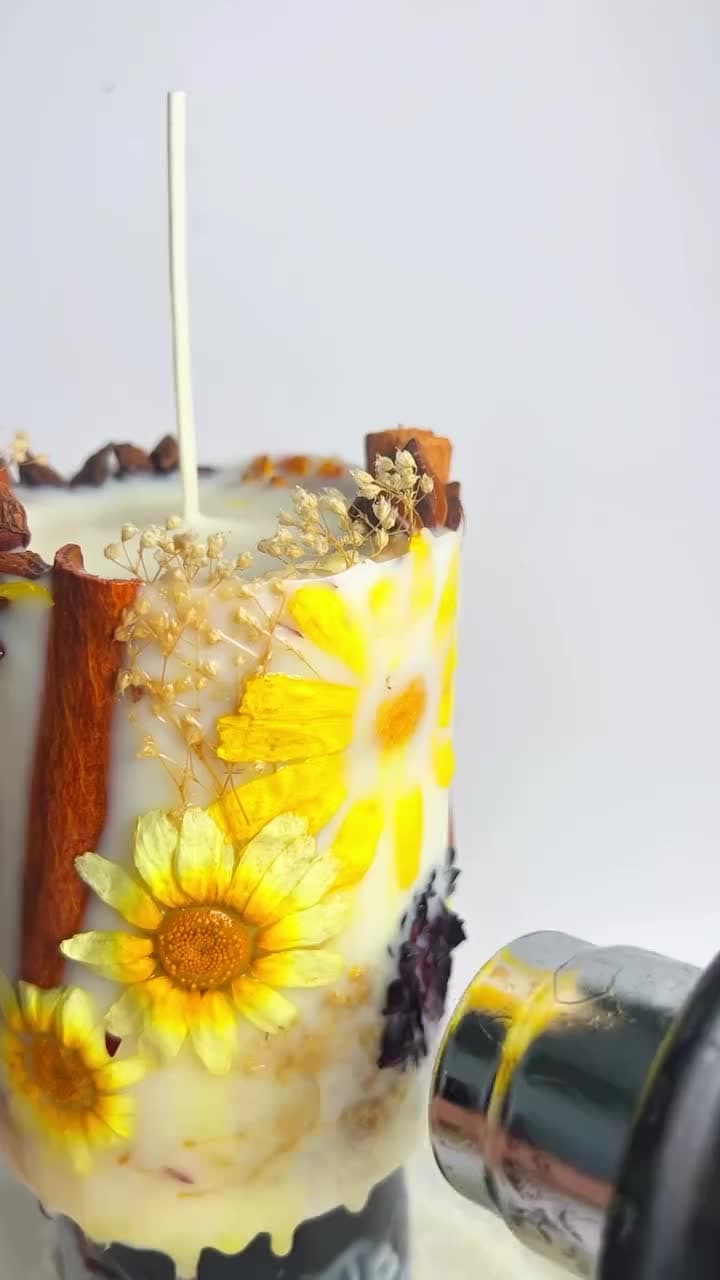
A candle has maybe five ingredients. That sounds simple — until you realize each one decides how cleanly it burns, how long it lasts, and how honestly it scents a room. Here's everything inside a Candera candle, and why it's there.
Most mass-market candles are poured from paraffin — a petroleum byproduct that's cheap, holds scent aggressively, and burns fast and sooty. We use a blend of natural soy wax and beeswax instead:
The tradeoff is cost and patience. Natural wax is softer, fussier to pour, and needs a proper cure before it ever ships. We think it's the only way to make a candle worth lighting.
Our wicks are plain cotton — no metal cores, no chemical stiffeners. A cotton wick burns at the pace natural wax wants to burn, which is what gives you an even melt pool instead of a tunnel. (Trim it to about a quarter inch before each burn — Candle Care 101 covers the whole ritual.)
The pansies, hydrangea petals, lavender sprigs, and ferns you see suspended in the wax are exactly what they look like — real flowers, pressed flat and dried for one to two weeks before they're arranged by hand against the vessel wall. Nothing printed, nothing plastic, nothing dyed to look alive. The Art of Pressed Botanicals tells that whole story.
Every fragrance is measured and blended by hand in small batches, built around essential-oil-forward notes — lavender, eucalyptus, rose, cedar, citrus — and tested until it feels true to the botanicals in the glass. We choose these notes the way herbalists do: lavender for calm, eucalyptus for clarity, cedar for grounding. The Science of Scent goes deeper into what these plants actually do.
Five honest ingredients, no shortcuts: natural wax, a cotton wick, real flowers, hand-blended scent, and a hand-written intention card. See them all in the collection — or watch the whole process on our craft page.